Survey Results “What you said about us”

What Our Community Taught Us About Self-Worth, Self-Care, and Being Seen
Last year, we quietly asked our community a series of honest questions.
Why did you book a Sherbet Birdie shoot?
What was happening in your life at the time?
Did the experience change how you saw yourself?
Did it stay with you?
We expected a mix of answers. What we didn’t expect was the consistency, depth, and emotional alignment across hundreds of responses.
What emerged wasn’t just feedback about photography.
It was a collective story about identity, healing, confidence, and the human need to be seen with kindness.
Here’s what we learned.
People Don’t Come to Sherbet Birdie “Just for Photos”
When we asked whether a major life event influenced the decision to book, around 7 in 10 respondents said yes, or described a clear moment of transition even if they initially answered “no”.
The most commonly cited reasons included:
milestone birthdays (30s, 40s, 50s)
divorce or breakups
health changes or chronic illness
trauma or grief
weight changes
new beginnings or “finding myself again”
becoming a parent
burnout or identity loss after years of caregiving
Only a small minority described booking purely “for fun”.
For most, the shoot was booked at a moment where something had shifted internally and they felt called to mark it.
This wasn’t about vanity.
It was about saying: this version of me matters.
Self-Care Looks Different
When You’ve Lived a Life
When asked about self-care spending, the answers were striking.
More than 60 percent of respondents reported spending several thousand dollars per year on self-care related expenses.
A significant portion reported spending over $10,000 annually, particularly once therapy, medication, health appointments, and preventative care were included.
Self-care most commonly included:
therapy or psychology
medication and health management
movement (gym, Pilates, dance, aerials)
beauty and grooming
travel and experiences
creative pursuits
Yet despite this, many respondents expressed hesitation about giving themselves permission to be fully seen, photographed, or celebrated.
For many, the photoshoot wasn’t replacing therapy.
It was something different.
A moment of integration.
A pause.
A reset.
A reminder.

Yes, It Was Self-Care.
Yes, It Was Therapeutic.
When asked directly whether the experience counted as self-care or therapeutic:
More than 85 percent said yes
The majority described it as both
Words that appeared again and again included: nourishing, grounding, empowering, healing, affirming, restorative.
Many shared that:
it was the first time they had ever felt comfortable in front of a camera
it was the first time they liked photos of themselves
they still return to their images years later when self-doubt creeps in
A small number didn’t personally label it “therapeutic”, but almost all still described a lasting emotional impact.

Confidence Didn’t Just Appear. It Stayed.
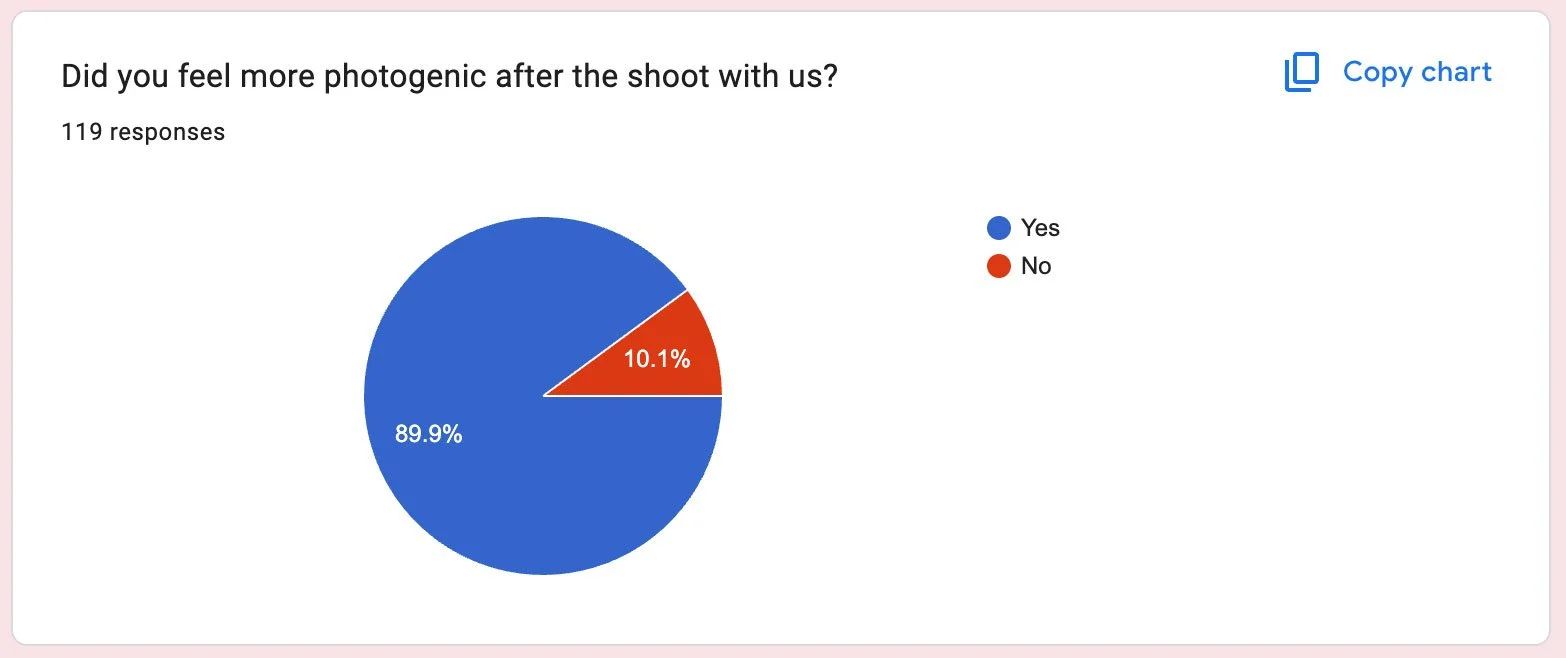
When asked whether they felt more photogenic after their shoot, the response was overwhelming.
89.9% of respondents said yes.
More importantly, many described a permanent shift in how they relate to being seen.
People shared that after their shoot:
they stopped hiding in group photos
they stopped avoiding cameras
they felt more confident being photographed in everyday life
they began recognising their features as strengths, not flaws
Several described their images as emotional anchors they return to during hard seasons.
Proof that their inner critic isn’t telling the truth.

It Was Rarely a One-Off
When asked whether they originally saw the shoot as a one-time or bucket-list experience, the majority said yes.
But when asked afterward whether they could see it as something they’d do again, well over half said they already had, or wanted to.
Many respondents described returning:
for milestone birthdays
during different life chapters
as a ritual every few years
to document different bodies, ages, and identities
Repeat bookings weren’t driven by novelty.
They were driven by meaning.
About Pricing, Value, and Trust
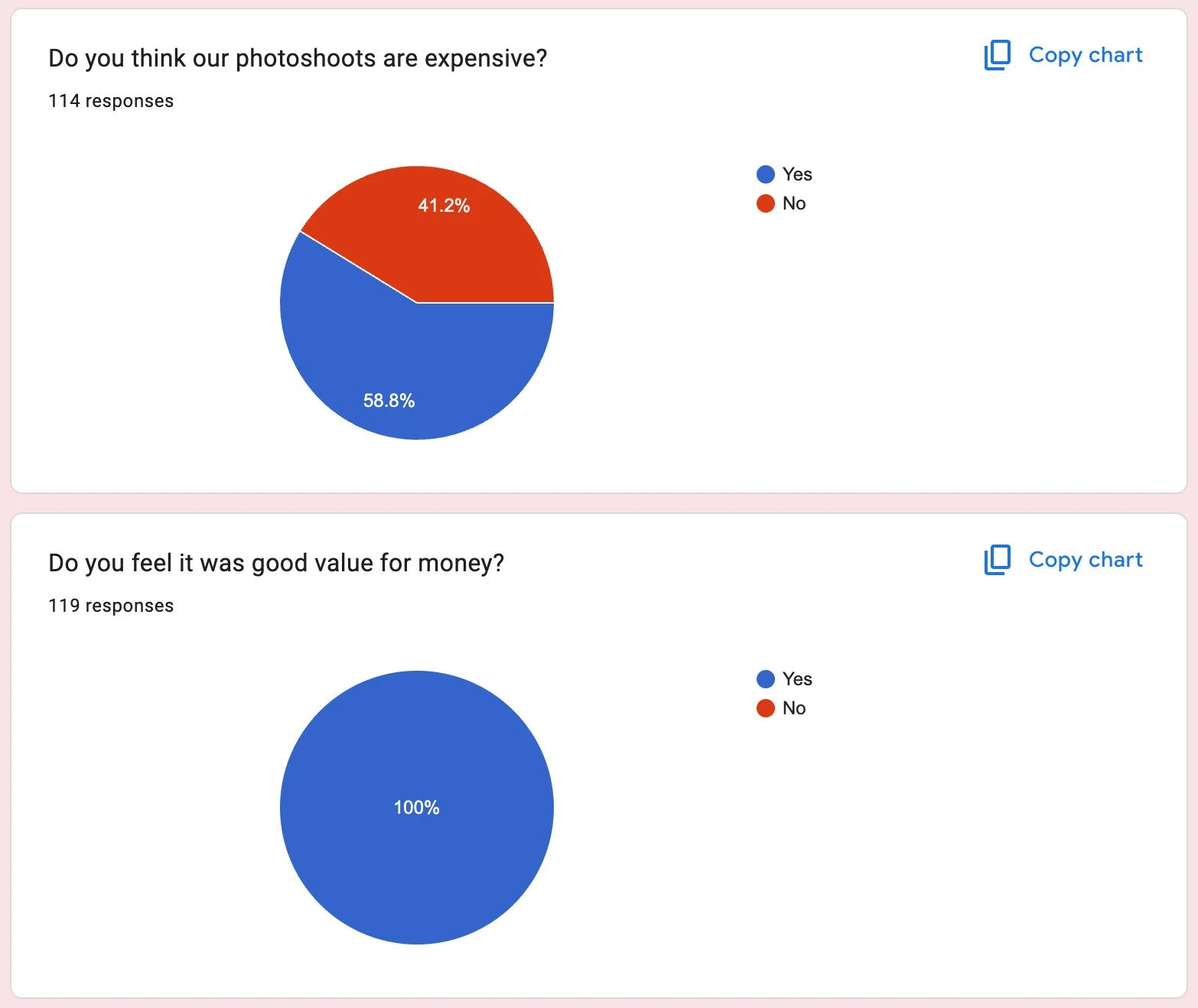
We asked hard questions about cost.
A 58.8% of people acknowledged the experience felt expensive
100% said it was good value for money
Trust came up repeatedly and unprompted.
People described past experiences with photographers that felt:
sales-driven
unclear or misleading in pricing
emotionally unsafe
lacking guidance or care
Sherbet Birdie stood out not because it was cheaper, but because it felt transparent, respectful, and human-first.
Many specifically noted that not being pressured to buy more made the experience feel safer and more ethical.

What This Taught Us
This survey didn’t just give us feedback.
It gave us responsibility.
To keep creating experiences that are safe, inclusive, transparent, and emotionally respectful.
To honour the courage it takes to be seen.
To remember that what we offer is not “just a photoshoot”.
It is a moment of permission.
A memory people return to.
A reminder that they were always worthy.
Thank you to every person who shared their story with us.
We carry it with care.

Survey Methodology & Notes
This article is based on 119 responses from a voluntary, community survey conducted by Sherbet Birdie in 2025.
The survey was shared with past clients and community members and included a combination of multiple-choice and open-ended questions. Respondents were encouraged to answer honestly and were not incentivised beyond the opportunity to share their experience.
The findings referenced above reflect clear, repeated patterns across hundreds of responses.
Percentages are rounded and used to describe dominant trends, not precise statistical measurements.
Where responses were mixed or nuanced, this has been acknowledged in the language used. Direct quotes have been lightly edited for clarity and privacy, without changing meaning or intent.
This survey was not designed as a clinical or academic study. Its purpose was to better understand client experience, emotional impact, and perceptions of value, safety, and self-worth within the Sherbet Birdie community.
We share these insights in the spirit of transparency, reflection, and continual improvement.